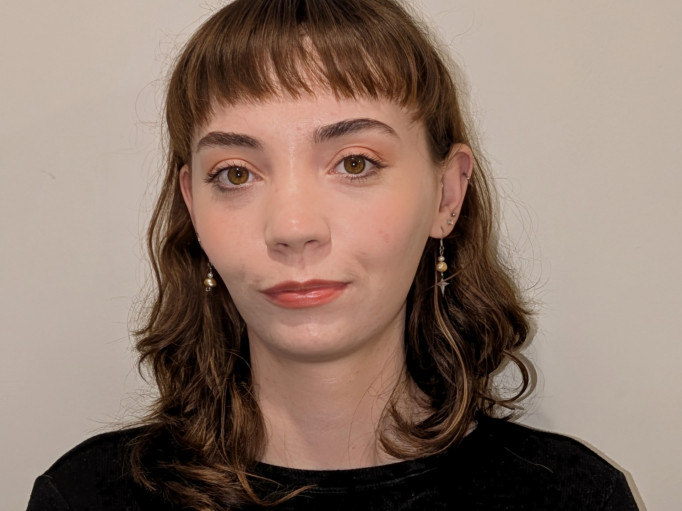
Hello, I'm Isla, the Graduate Marketing and Fundraising Officer here at Toybox. I write monthly blogs to show you behind the scenes at Toybox. This month I'm highlighting our approach to storytelling.
Rethinking what powerful charity storytelling looks like
I used to think powerful charity storytelling was limited to those hard-to-watch TV adverts. The kind you watch through your fingers because they're so upsetting. It made sense in my mind that the goal was to show the harshest realities in order to provoke enough of an emotional response that people felt compelled to act. But working for Toybox has reshaped my understanding of what powerful communication can really look like.
It’s easy to assume that effective charity storytelling means only showing the most distressing images and stories but what that does is create fear or pity. And as I have learnt, these emotions are, perhaps surprisingly, not the most effective motivators for lasting engagement or change. Toybox takes a different approach: ethical and hope-based communications.
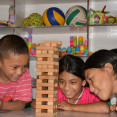
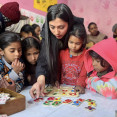
Hope-based storytelling moves the focus from suffering and towards dignity, resilience, and agency. It moves away from shock tactics and encourages connection and empowerment. Instead of encouraging you to feel sorry for someone, we invite you to stand alongside the street children we work with and support them to access a better future.
In my opinion, because of the work we do, how we choose to communicate is even more important. We work with street children, a highly vulnerable group, who are particularly at risk of misrepresentation or exploitation. It is therefore important that we safeguard their identity, their story, and their dignity, and sensationalising these children’s experience does nothing to support that.
As charities we have a responsibility to represent people’s lives accurately and respectfully, not only for those whose stories we share, but also for those who support our work. This means portraying children and communities as active participants in their own lives, not passive victims of circumstance.
What ethical storytelling looks like in practice
It’s one thing to talk about concepts like informed consent, accuracy, and dignity-first narratives, all of which are principles that guide everything we do at Toybox, but it’s another to put them into practice in a meaningful way.
One of the most powerful ways we do this is by creating space for children to tell their own stories. Our case studies are filled with their voices. In fact, many are almost entirely told in the child’s own words. There is something uniquely powerful about hearing directly from a young person about their challenges and their hopes for the future.
What I love in particular is that this year our Ethical Storytelling Lead, Gerry, has worked with children in Kenya and Bolivia to create their own versions of our supporter magazine. As part of this the children not only wrote but also designed and edited the magazine. We really get to see what matters to the children, how they see their lives, and what they hope for because they have the space to share their own stories on their own terms. If you would like to read the magazines, you can find them here – Bolivia magazine, Kenya magazine.
There’s nothing quite like reading a child’s story in their own words to be able to understand the depth and reality of their situation. But what stands out most to me is that despite what these children have been through they still hold hope for what their futures could become. Even having faced the most difficult circumstances, their words reflect resilience and ambition for something better.
Why Hope Matters
I think what Toybox’s storytelling shows is that hope-based communications isn’t about turning something heartbreaking into something light-hearted. Instead, it’s about giving our supporters the hope that things can get better by showing them how it’s possible.
Interestingly, as humans we’re naturally drawn to negative stories. It’s what’s known as “negativity bias”. It means we are much more drawn to bad news and we’re more likely to share and remember the bad rather than the good. But this means that we spend more time reacting to the world we fear rather than talking about the world we would like to build.
At Toybox, we aim to strike a balance. We don’t ignore the realities street children face, but we also make sure to show what’s possible when they are supported. It’s about highlighting just how much of a difference opportunity can make because it’s difficult to imagine a better future if we’ve never seen what it looks like. The children we work with show us exactly what that future could look like: a future where they are safe, supported, and no longer living on the streets.
At its core, ethical and hope-based communication isn’t just about telling better stories. It’s about telling stories more truthfully and respectfully. And most importantly it’s about telling stories that recognise not only what people have been through, but who they are, and who they have the potential to become.
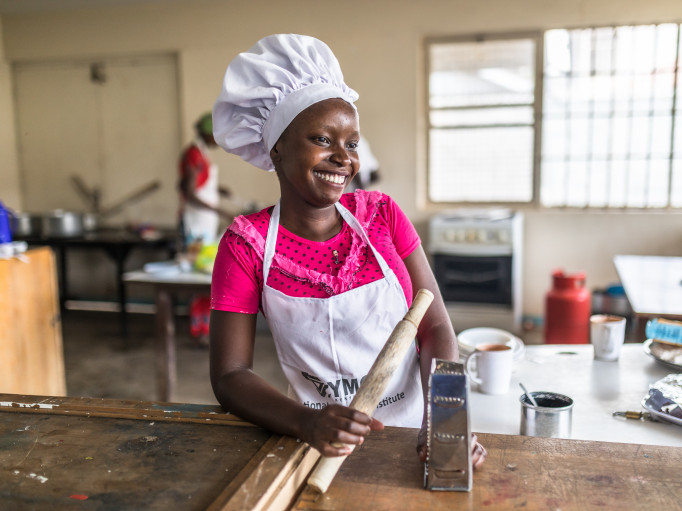
Pictured at top of page: A young person from our PKL Kenya project trains as a cook Pictured at bottom of page: Isla, the graduate marketing and fundraising officer
Read my previous blog here