Roz Elliott, Toybox’s Programme Manager for Latin America, shares her experience of visiting a Toyxbox supported project in Guatemala City. Through stories of resilience and connection, Roz reveals how meaningful relationships and flexible learning approaches are helping children like Adriana take brave steps toward a brighter future.
It all starts with trust
Supporting children in street situations back into education doesn’t begin with textbooks or classrooms - it begins with trust. Earlier this year, I travelled to Guatemala City to spend time with the team behind Caminar Juntos (“Walking Together”), a Toybox-supported project dedicated to helping children in street situations access education. What struck me most was the team’s unwavering commitment to meeting children where they are - literally and emotionally.
One of the newer members of the team, Petro, told me that for a while many of the children called her ‘Prof Charlie’ until she’d earned their trust enough that they used her name.This simple shift speaks volumes about the importance of relationship-building in this work.
educational barriers
Children in street situations face enormous barriers to education. Even when they make it into the classroom, the challenges don’t stop. Many experience stigma and discrimination from peers and even teachers - because of where they live, their family circumstances, or irregular attendance caused by economic pressures. The formal education system often isn’t equipped to support these children in a way that helps them thrive. Sadly, this can lead them back to the streets.
In Guatemala, the Ministry of Education has created the National Alternative Education Program (PRONEA), a virtual platform offering self-paced courses for children who have missed out on parts, or all of their education. Toybox’s partner, Puerta de Esperanza, is a registered provider of PRONEA courses, helping bridge the gap for children who struggle in traditional school settings.
The team’s ability to meet children at their places of work, visit their homes, and provide ongoing encouragement and academic support is central to the project’s success. Weekly workshops in soft skills, art, and spirituality offer additional enrichment, helping children see education not just as a requirement, but as something enjoyable and worthwhile.
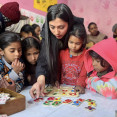
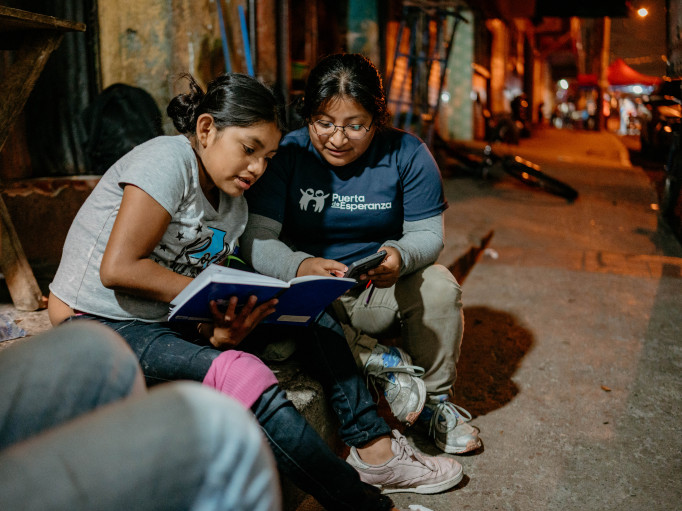
Pictured below: Staff member Petro sits with a project participant on the pavement as she works on her course work. PRONEA allows children to progress with thier studies at their own pace, offering a more flexible and less pressured alternative to traditional schooling - creating space for learning whenever and wherever it's possible.
street side education
“Virtual learning” in this context looks very different from what we might imagine in the UK.
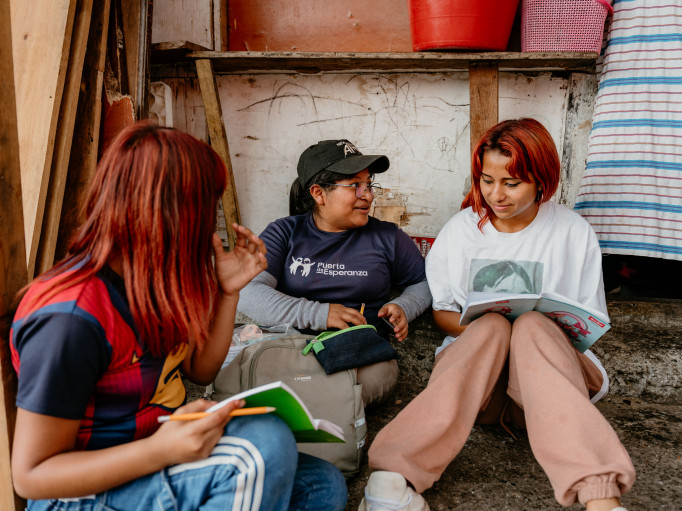
During my visit, I walked through crowded streets filled with the sounds of daily survival - women breaking charcoal into small bags to sell, girls washing glass bottles scavenged from the dump to recycle. Petro greeted many of them warmly. She called over three girls, and we moved to a quieter spot. There, leaning on the ground or concrete posts, the girls worked on their coursework in notebooks Petro had brought. They had previously enrolled in a local school, but despite a welcoming teacher, the formal setting didn’t suit them. They dropped out.
To ensure they don’t fall further behind in their education, the project has enrolled them in PRONEA and now the staff meet with them regularly to complete course work.
It was already dark when we went to meet with Adriana. She was asleep, hood up and lying on the concrete. A table was set up nearby where her family were preparing and selling food. Toddlers wandered about, playing in the road with a broken push along toy. When we arrived, her mother woke her to do her coursework. In the dim light, at the rickety table, with the younger children playing around her and vendors nearby talking and selling their items, Adriana leant over the notebook with Petro and studied.
opening doors to a different future
She didn’t complain at being woken, despite her long day working. She had been waiting for Petro to arrive before drifting off. While they worked, the team handed out snacks and colouring sheets to keep the younger children occupied. Once Adriana completed her worksheets for the day, Petro took photos of them to submit to the PRONEA platform as proof of her work.
Day by day, Adriana is building on her progress to earn her primary qualification - a remarkable achievement given the challenges she faces. The team continues to walk alongside her - and others attending the project, offering encouragement and support. Their hope - and ours - is that education will open doors to a different future.
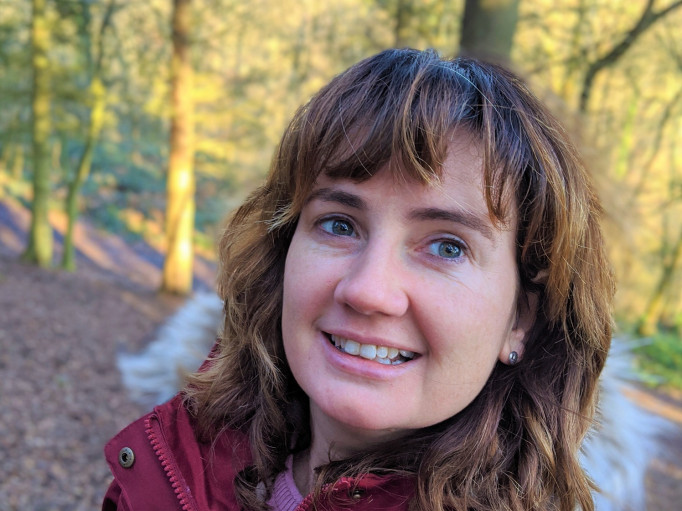
Pictured below: Roz Elliott, Programme Manager, Latin America.