Following the recent publication of our climate crisis special report, we sat down with Naomi Hall Opiyo, Director of Impact and Programmes at Toybox, to hear more about how climate change is affecting street children around the world.
Here, Naomi reflects on a recent visit to Kenya, the hidden challenges children face during emergencies and what Toybox and our partners are doing to support communities through increasingly extreme weather.
How is climate change affecting the daily lives of street children?
Climate change is affecting street children in different ways depending on the context in which they live. We are now seeing the impact of climate shocks more and more, even in urban environments.
Climate change is driving more people to migrate from rural to urban areas. As earning a reliable income through agriculture becomes harder, families are moving to cities in search of better opportunities. But for many, life in the city is not what they expected. Without formal qualifications or experience, they struggle to find work. Some end up living on the street - begging, selling small items, or doing informal jobs to survive. As more children and families are pushed into street situations, urban areas face rising poverty, overcrowding and increased pressure on already limited resources.
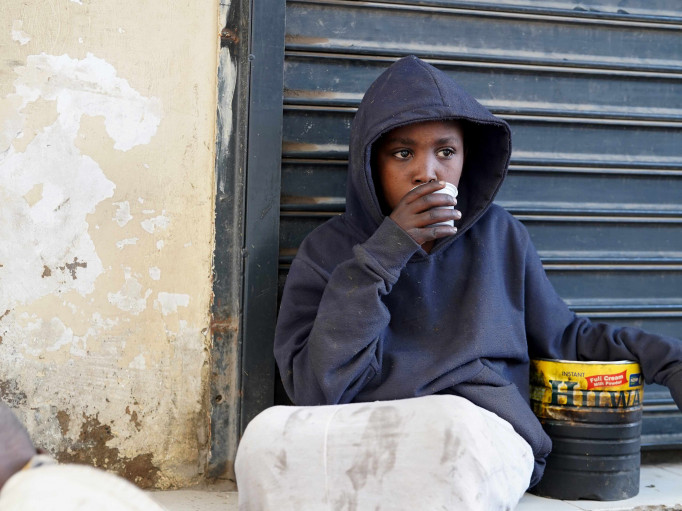
Children living on the streets are also becoming increasingly exposed to the elements. There are risks of flooding and extreme heat which can affect them in terms of their health. Street children have a lot less protection than children living in houses or more comfortable surroundings have. It is also harder for them to bounce-back from climate shocks because of having limited access to a good nutrition and healthcare. Though on one hand they are incredibly resilient, they are also a lot more vulnerable.
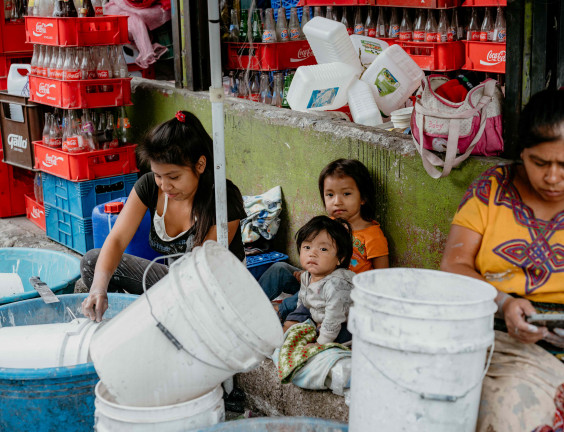
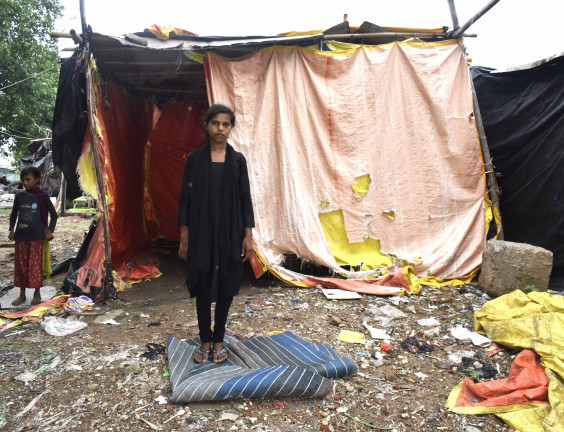
Pictured below: (L) A family work to clean barrels on the side of the road outside La Terminal market in Guatemala. (R) "During monsoon season, our homes are flooded with water. Everything gets dirty. Even when we try to clean, there’s still muddy water everywhere and it just makes everything feel worse.” – Dhara, 14, India.
You’ve seen the impacts across different countries. What are some of the unseen or overlooked challenges street children face during climate emergencies?
During climate-related emergencies like floods, street children who become displaced may go unnoticed. Because many street children live transient lives it can take time before anyone realises they have disappeared. If a child is already separated or estranged from their family, no one may realise they’re missing until it’s too late.
In addition, children who do not have their birth certificate and are not registered do not officially exist on record. This makes it harder for them to get vital support during or after a crisis.
Why is something like a birth certificate so important when a child has lost their home or been displaced?
When a child has a birth certificate, they are officially recorded and often registered in the area where they live. This makes a big difference during emergencies - authorities know the child exists and can include them in response efforts. Local registration can also help track if someone goes missing, which is especially important for vulnerable children.
When emergencies like floods or fires destroy belongings, many children lose the few personal documents they have. If a child doesn't have anything to prove their identity, getting a birth certificate later becomes extremely difficult. If they’ve already got a birth certificate, then they’re registered on the system and it’s easier for them to get a replacement.
Depending on the country and context we have also seen some cases where children without their birth certificates or other identity documents (such as Aadhar cards in India) have not been able to access government support during emergencies.
We hear a lot about physical dangers but what emotional impact does climate change have on street children?
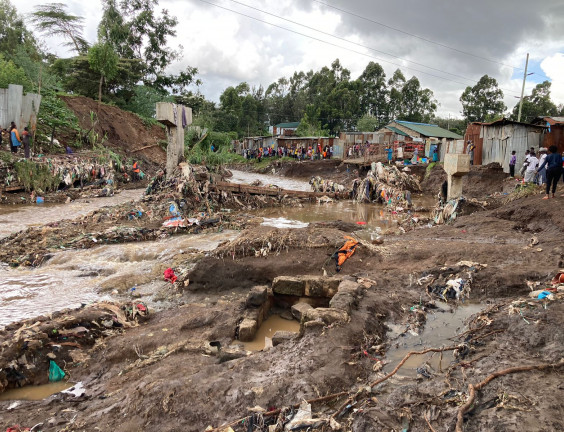
What comes to mind right away is the impact of the severe flooding in Nairobi, Kenya last year. Flooding like this is very rare in the urban slums where street children in our projects live, and it came as a huge shock.
When I visited Kenya a couple of months ago, I spoke with mothers living in these slum communities. During our conversations, it was clear they are still deeply affected by the experience. Many lived in fragile makeshift shelters where the water rose quickly, forcing them to grab their children and flee. Most lost everything they owned.
Hearing their stories, I couldn’t stop thinking about the trauma the children must have gone through - especially those who were separated from their parents. For children who already had very little, losing even the few belongings they had will have been absolutely devastating.
With the rainy season starting again, many families and children are reliving this trauma and struggling to cope with the lasting impact.
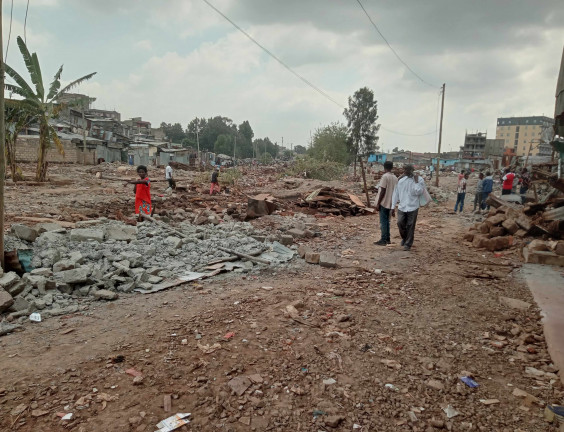
Pictured below: (L) A collapsed bridge in the Kiambiu area in Nairobi, Kenya, during severe flooding in 2024. (R) An empty space where hundreds of homes in Nairobi's slums were destroyed after the heavy rainfall.
Could you tell us more about your experience meeting families impacted by recent flooding in Kenya?
Hearing from people who experienced such devasting effects of climate change directly and seeing the looks on their faces as they spoke has really had an impact on me.
It’s hard to imagine being in that situation: it’s already getting dark, your house is filling up with water very quickly, you have so little and you don’t know where to go. That must be very, very scary. These women spoke of the panic of not being able to find their children in the chaos and not knowing what to do.
The trauma also didn’t end there. A couple of days later, they witnessed the government come with bulldozers and demolish the remaining shelters. These were informal structures, built without proper foundations and located too close to the river so they were cleared for safety. But while these structures were simple, they were still their homes - homes that their children knew - so losing them was deeply painful.
Listening to these stories was heartbreaking, especially now that the rains have started again and the fear is returning. On the other hand, it was encouraging to hear that the women all felt they were in a much better situation in terms of being able to restart their businesses and re-enrol their children into school. They spoke with gratitude about the support from Toybox and our local partner, and how much it helped them get their lives back on track.
How is Toybox responding to the climate crisis?
We are closely monitoring climate-related emergencies in all of the countries where we work and supporting our partners to be able to respond where they can.
One of the ways in which we are doing this is by engaging with children and families to identity the main climate risks in their communities and find ways to reduce these risks. After last year’s devastating flooding in Nairobi, many families have now moved away from the riverbanks to higher ground. They are also more prepared in case flooding happens again - keeping copies of important documents safe and knowing what actions to take to protect themselves.
The floods also destroyed essential items like seeds, tools, and materials used to run small businesses. In response, Toybox has helped families rebuild by making small investments to replace what was lost. These families already have the knowledge and skills to run their businesses - they just need help replacing key supplies so they can get back on their feet.
In some areas, we also work with our partners to stockpile emergency supplies. For example, in Delhi in India extreme heat now happens every year. Our local partner has certain items already procured to support street children during these times including umbrellas and rehydration sachets. They are also preparing for extreme cold weather by storing items needed to protect children during the winter months.
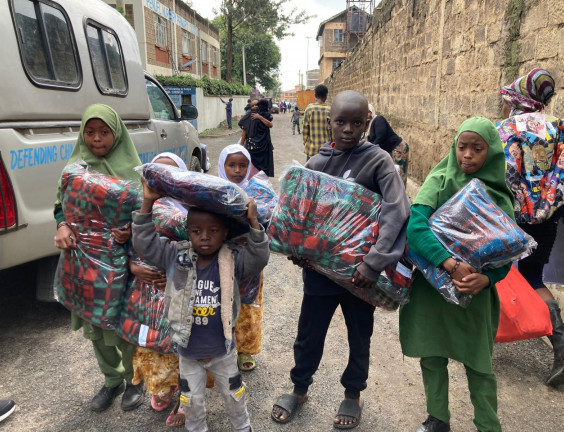
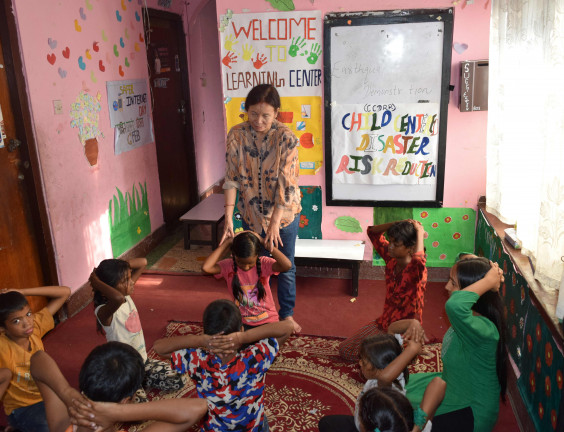
Pictured below: (L) A group of children receive relief materials including blankets during the floods in Kenya last year. (R) Young people learn how to protect themselves in a earthquake during disaster preparedness workshops in Nepal.
Finally, if resources weren’t a barrier, what more could be done?
There is a real need for safe, equipped spaces where street children can go – especially during extreme weather like heavy rain. Being exposed to the elements puts their health at serious risk, and having somewhere safe and dry to shelter, even just to store their belongings, would make a big difference.
I recently watched videos from a young boy in Bolivia, sharing his daily life. It was heartbreaking to see how heavy rain affected him. On rainy days, no one comes out to buy from him, so he can’t earn money to eat. Worse still, the items he had bought to sell were ruined by the rain. It was a double loss - he had spent money on the goods, but couldn’t sell them, and now they were useless. Sadly, many street children face this same problem. They have nowhere safe to store what little they own and are often forced to move by police or circumstances beyond their control.
During a recent visit to Nairobi, I went to the urban farm and was really struck by the influence that it has. It is an oasis of calm in quite a chaotic environment. Just being among the trees and crops has a calming effect on the children. So much so that the space is now used for various training sessions, and our partner has noticed that the children are more relaxed and happier in that environment. Outside the gate, you don’t see much greenery – it’s very dusty and dry.
In Guatemala, our partner takes children out of the city on day trips to experience nature. These trips offer a break from the noise and pollution, giving children a chance to breathe cleaner air and enjoy the peaceful surroundings. I would love to see more children have access to these kinds of safe and nurturing environments.
Find out more about our climate change work and see the difference you can make

Pictured above: Naomi Hall Opiyo, Director of Impact and Programmes at Toybox