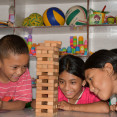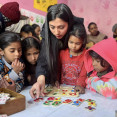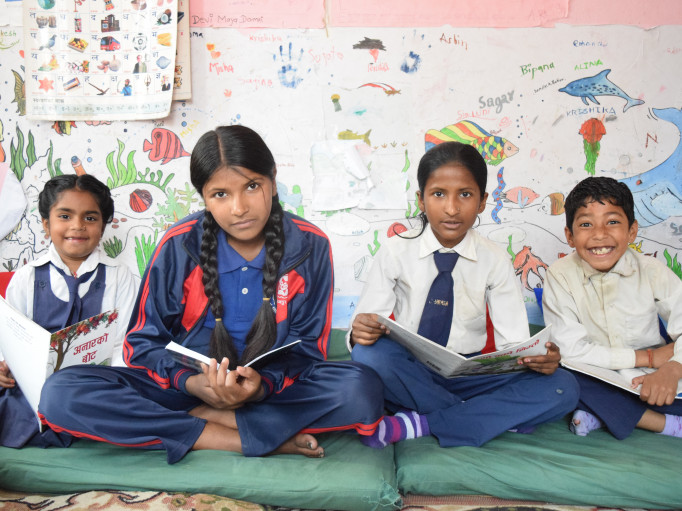
Pictured above: Children enjoying reading after school
“My life has improved as I have learned to read and write properly, and I have become more aware of the difference between right and wrong.” (Boy, 11, India)
The wellbeing survey
The wellbeing of the children and young people we support is paramount to our work at Toybox. We are committed not only to ensuring that children and young people have their basic needs met, but that our interventions support them and their families in the long term. Three years ago we implemented our first wellbeing survey so we could better understand the support the children needed. The wellbeing survey looks at a combination of physical, mental, emotional and social health to understand how the children are in terms of wellbeing.*
This year, 322 children aged 8-12 took part in the survey. This represents a growth from our first pilot year, which reached 60 children across two countries. In this blog we want to highlight some of the key findings from the wellbeing survey.
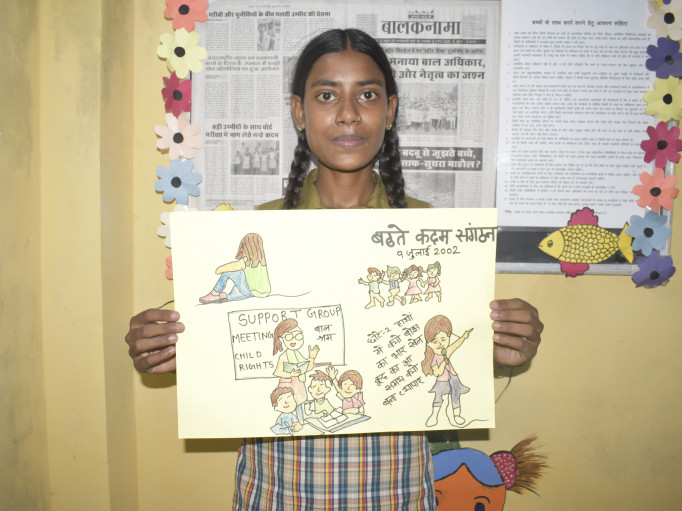
Pictured above: A girl shows her poster on child rights
What we learnt
Hope for the future: An amazing 77% of children feel hopeful about their future.
Self-esteem: 76% of children agreed to ‘liking being the way they are’. One participant shared, "I feel good the way I am, I’m going to be like this my whole life" (Girl, 9, Guatemala)
Wellbeing: 66% rated their wellbeing as being good or very good and 70% reported that their wellbeing had gotten better over the last year. However, this figure is lower among children with disabilities with 57% reporting that their wellbeing had gotten better over the last year.
Where they live: 55% of children in the survey said they felt safe in the area where they live. Some of the common reasons children listed as to why they felt unsafe included crime, drug abuse, theft, and violence on the streets.
School: 87% of children felt welcomed at school and 84% said they felt safe in school.
It is clear that for many of the street children we support, their wellbeing is on the up, however, there is still lots to do. Only 38% said they were never hungry in the last week, and 19% of children were either always or often hungry in the last 2 weeks.
One child shared that:
“I would love to have access to my needs and be fully provided like other children living a normal life. If my mother would be supported to get a job I would be happy because I would be provided with my needs.” (Boy, 12, Kenya)

Pictured above: A women's counselling session
What this means
Naomi Hall Opiyo, Director of Impact and Programmes at Toybox explains, "We are really pleased that we were able to get more information directly from many more children in Toybox projects through this year's annual wellbeing survey.
It's encouraging to hear how most of those who participated in the survey have seen improvements in many aspects of their wellbeing in the past year – despite not only the everyday challenges they face, but significant external events they had no control over which directly affected them. These included climatic emergencies, civil unrest and the knock-on impact of the Iran-US war driving inflation, economic decline and making everyday essentials even less affordable and accessible.
The data will help us continue to work with our local partners to target support to improve wellbeing within our sphere of influence. Next year, we are looking forward to conducting a similar survey focused on teenagers and youth to get their perspectives."
Click here to see more of our work in action
*These results give us an indication of the wellbeing of children in street situations in Toybox supported projects based on a survey of approximately 10% of children aged 8-12 in each context we work, but the survey was not a piece of research and so is not “statistically significant”.