telling stories with integrity
Toybox's Ethical Storytelling Lead, Gerry Walker shares her thoughts on the importance of sharing children’s stories truthfully and respectfully.
At Toybox, we know how important it is for you to hear directly from the children you support. Many of the young people we work with choose to share parts of their lives so that others can better understand their realities. Even after more than ten years at Toybox, I never take that trust for granted.
I feel privileged to help amplify their voices and a deep sense of responsibility to ensure that our communications honour, never exploit, the experiences they share. It takes a lot of courage for children to open up and, by sharing their stories, they place their trust in us to represent them truthfully and sensitively. This is something we never take lightly.
Hearing children’s reflections and hopes, often in the face of real adversity, is incredibly humbling. Their stories are a powerful reminder of every child’s potential - irrespective of their background. As best practices evolve, so does our approach to storytelling. At the heart of it remains the fundamental belief that we must always put the safety and dignity of every child first.
What does ethical storytelling mean at Toybox?
Informed consent is the cornerstone of ethical storytelling at Toybox. We believe every child has the right to understand what is being shared about them, where it will appear and why. Just as importantly, they also have the right to say no - without fear of any consequences.
We work closely with our local partner staff, who know each child’s circumstances well. Before gathering any story, quote or image, time is taken to clearly explain to a child how their story will be used. As part of this process, we recently developed a short, child-friendly animation to be shown during the consent gathering process. We are aware of the power imbalance between adults and children, and between project staff and participants. That’s why we are always careful to make sure that young people know they are never obligated to share their stories and that saying yes or no will never impact the support they receive."

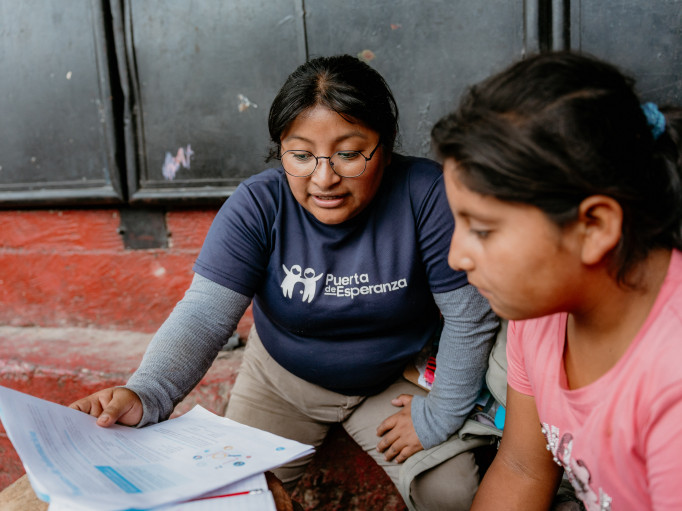
Pictured above (top): Image by Toybox/Sendero Studio: Every story and photo we share begins with the child’s informed consent. A Puerta de Esperanza team member sits with project participant Cristina, during a study support session.
Pictured bottom: Gerry Walker, Ethical Storytelling Lead at Toybox.